Leg Ulcers (Sores)
Venous Ulcers
Chronic venous insufficiency (CVI) affects millions of people. In more advanced stages, it can lead to skin damage and open sores called venous ulcers—a serious but treatable condition.
We are grateful to our patients for consenting to the use of these images for educational purposes. Every effort has been made to remove all identifying information in accordance with privacy and confidentiality standards.
Why Leg Wounds Don’t Heal
Venous ulcers are not just “skin problems”—they are caused by underlying vein disease.
When pressure builds up in the veins:
- Fluid leaks into surrounding tissue
- Skin becomes inflamed, fragile, and easily damaged
- Oxygen and nutrients cannot reach the area effectively
- The body struggles to repair the wound
- Persistent itching can lead to scratching and skin breakdown
- Bacteria on the skin can enter, causing repeated infections (cellulitis)
Even with proper wound care, healing is often slow or incomplete if the underlying vein problem is not treated.
Why Treating the Veins Matters
Compression (stockings or wraps) helps improve blood flow and reduce swelling. It is an important first step—but it does not fix the root cause.
Research shows:
- Treating abnormal veins helps wounds heal faster
- It significantly reduces the risk of recurrence
- Without vein treatment, ulcers often return—in up to 45–70% of cases
In other words, the wound may close temporarily, but the underlying problem remains—leading to repeated breakdown.
Why Early Evaluation Matters
Vein disease is progressive, meaning it can worsen over time if left untreated. What may begin as mild symptoms can progress to skin damage or ulcers.
In severe cases:
- Infection can spread into the bloodstream (sepsis, life-threatening)
- Infection can involve the bone (osteomyelitis, limb-threatening)
A simple, painless ultrasound can:
- Identify the underlying cause
- Map the affected veins
- Help create a personalized treatment plan
The Good News: Modern Treatments Work
Modern vein treatments are:
- Minimally invasive
- Performed in the office
- Quick, with little downtime
Common options include:
- Endovenous laser ablation (EVLA)
- Medical adhesive closure (VenaSeal)
- Ultrasound-guided sclerotherapy
Often, a combination of treatments is used to close unhealthy veins and restore normal blood flow.
For patients with ulcers or advanced disease:
- Healing improves when vein issues are treated early
- Pain, swelling, and skin damage can significantly improve
- The risk of recurrence is much lower
Call to Schedule a Consultation Today!
If you have sores on your legs that won’t heal, keep coming back, or have been blamed on conditions like diabetes, eczema, or psoriasis—and you’ve been dealing with long-term wound care—there may be an underlying vein problem.
The good news is that modern vein treatments are safe, performed in the office, require little to no downtime, and are designed to keep discomfort to a minimum.
Don’t lose hope. Treating the root cause can help your wounds heal and provide lasting relief. Call us today at 816-396-0245 to schedule a Consultation with your Venous Ulcer Specialist at Alsara Vein Clinic.
Varicose Vein Treatments are coved by insurance including Medicare and Medicaid
Vein Disease Menu
An estimated 60% of women and men suffer from vein disease.
Some of the signs and symptoms include leg pain, achy legs, burning in legs, numbness in legs, leg cramps, heaviness in legs, itching legs, restless legs, tired legs, swelling in ankles or leg calves. Left untreated, it may result in skin discoloration, bleeding veins, sores that heal poorly, and blood clots.
To understand vein disease, you must first understand the function of veins. Arteries are blood vessels responsible for delivering blood to all areas of the body, including the legs. Veins are responsible for collecting the same blood and bringing it back to the heart. Leg veins, located farthest from the heart, have to work extra hard to push blood upward against gravity toward the heart.
Studies have shown that a vast majority of people have genetically weak veins. Now, if you add more risk factors such as standing or sitting for prolonged periods of time, pregnancy, excess weight, and trauma, veins can start to fail. As veins begin to fail, blood starts to pool in the legs resulting in veins that are "varicose"—abnormally swollen or knotted.
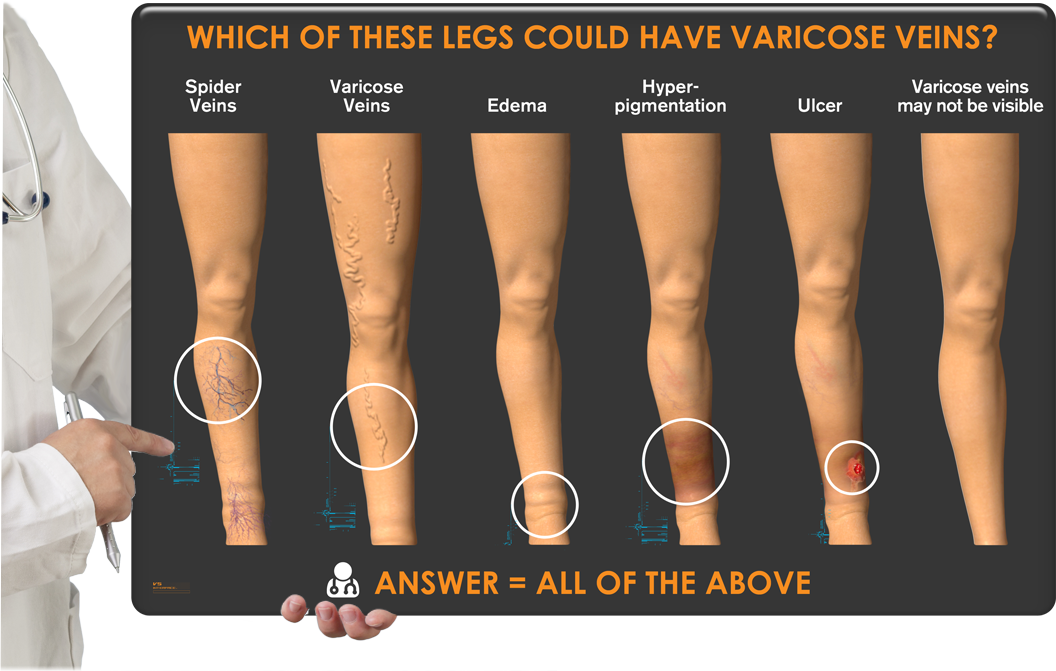
Varicose veins are large, bulging veins that are often visible on the skin surface, but the majority are weak or damaged blood vessels below the surface of the skin that cause poor circulation and are only visible with help of an ultrasound.
Spider Veins are smaller versions of varicose veins that usually appear on the skin's surface as small, red to purple blood vessels that resemble a spider's web. While spider veins rarely pose a medical problem, they often signal problems in the larger veins below the skin's surface.
Chronic Venous Insufficiency is a medical condition in which the veins are unable to pump oxygen-depleted blood back to the heart, often resulting in chronic swelling of the legs.
Deep Vein Thrombosis (DVT) is the formation of a blood clot within a deep vein and can be a complication of varicose veins and chronic venous insufficiency. Classic symptoms of deep vein thrombosis include swelling, leg pain, and skin redness of the affected area.
Varicose Veins and Restless Leg Syndrome (RLS) have many symptoms in common: an urge to move your legs, that creepy-crawly feeling, itching, tingling, and restlessness. These symptoms may be an indication of poor circulation, even though you have no visible varicose veins.
Leg swelling (edema) is a common sign of varicose veins. The pooling of blood, increased pressure and subsequent “leakage” causes swelling in the ankles and feet as gravity pulls the fluid down.
Over time, you may develop leg ulcers. Ulcers due to varicose veins are painful and difficult to heal unless the underlying venous backflow is corrected.
Signs and Symptoms
- Aching
- Burning or numbness
- Cramping or 'Charley horse'
- Heaviness
- Itching
- Leg pain
- Restlessness in legs
- Tiredness
- Swelling in feet ankles and calves
Left untreated, may result in skin discoloration, bleeding veins, sores that heal poorly, and blood clots.
It might be surprising to learn that restless leg syndrome, leg cramps, swollen ankles (edema), leg ulcers, varicose veins, and spider veins could all be symptoms of vein disease. We've helped thousands achieve relief with in-office treatments. Alsara Vein Clinic is located north of Kansas City in St. Joseph, MO a.k.a. St. Joe. Schedule your Free Consultation today with Alsara Vein Clinic. Walk-ins are welcome, no referral necessary!
Varicose Vein Treatments are covered by insurance, including Medicare and Medicaid.
